
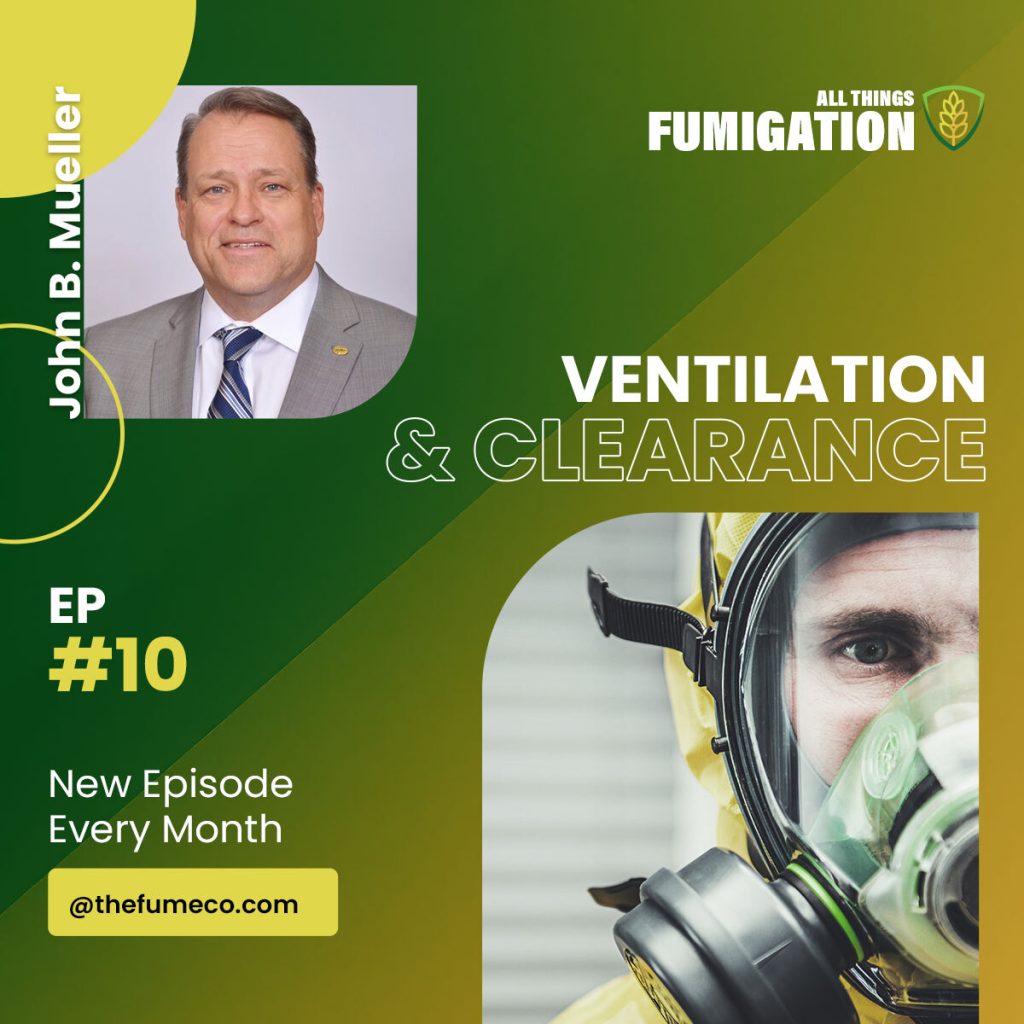
Proper ventilation and clearance are mission-critical phases in the fumigation process—but also among the most hazardous and misunderstood. In Episode 10 of All Things Fumigation, John B. Mueller, an industry veteran and host, addresses common pitfalls, advanced strategies, and compliance essentials for licensed fumigators and facility managers alike. Drawing from extensive field experience and up-to-date regulatory knowledge, John B. Mueller unpacks the science and practical realities behind safe, efficient, and compliant fumigation clearance.
In this blog post, we break down key insights from the episode on:
- Maximizing ROI and safety with connected monitoring devices
- Best practices for ventilation and clearance
- Technical and regulatory nuances facility owners must understand
- Actionable advice for both field operators and decision-makers
Whether you’re a licensed applicator or a facility owner, these strategies can help you safeguard your team, protect your business, and remain in full regulatory compliance.
Maximizing ROI and Safety with Remote Monitoring Systems
Modern remote monitoring systems are reshaping how fumigators verify efficacy and ensure safe clearance. Yet, upfront costs remain a frequent barrier for many organizations.
“There’s a very rapid return on investment… I’m finding between 5% and 10% fumigate cost savings with every fumigation.” — John B. Mueller
The Business Case for Connected Devices
- Direct Cost Savings: Traditional, periodic gas readings can miss peak concentrations, often resulting in unnecessary (and expensive) “over-gassing.” As John B. Mueller points out, continuous monitoring avoids this, cutting average gas costs by 5–10%.
- Case Example: For a 100,000 cubic foot fumigation, connected monitoring paid for itself after only a few uses, with savings of up to $5,000 in a single large-scale application.
- Validation & Reputation: Digital records provide tangible proof of successful treatment and compliance—a growing demand from food safety managers and regulators.
Key Takeaway:
Investing in connected monitoring is not just a safety or compliance issue—it’s a smart business move that can rapidly reduce operational costs while protecting your company’s reputation.
Ventilation and Clearance: Managing the Greatest Safety Risks
Ventilation and clearance are the most dangerous steps of the fumigation cycle, with significant risks to crew and bystander safety if mishandled.
“When we go in to activate ventilation… we’re walking into an IDLH atmosphere. That’s why we have to wear either a gas mask or an SCBA.” — John B. Mueller
Best Practices for Safe and Compliant Clearance
- Unsealing is Critical: The crew that seals equipment is best positioned to unseal it safely. Miscommunication can lead to overlooked seals—potentially “million-dollar mistakes.”
- Personal Protective Equipment (PPE): Full respiratory protection is mandatory when entering hazardous (IDLH) areas to initiate ventilation.
- Monitor the Breathing Zone: It’s not enough to check for low gas concentrations in the open air. Densely packed product can retain toxic levels—and off-gas back into the workspace if ventilated too soon.
- Regulatory Thresholds: In the US, OSHA and EPA standards specify:
- Phosphine: 0.3 ppm (time-weighted average)
- Methyl Bromide / Sulfuryl Fluoride: 1 ppm maximum
Pro-Tip:
Always clear and document ALL breathing zones—not just the free air—before re-entry. If unsure, err on the side of extended ventilation and recheck to prevent dangerous re-adulteration from dense materials or overlooked compartments.
Strategic Planning: The “Dilution of 12” and Operational Efficiency
Controlled, well-planned ventilation not only keeps people safe but enables fast facility turnaround and optimal use of labor.
“If we dilute [the air] on average about 12 times, we’re gonna get there… but you need to know in advance where to activate these ventilation systems.” — John B. Mueller
The Science: Calculating Ventilation Time
- The Dilution of 12 Rule: Plan to circulate a volume of clean air equal to 12x the treated space to reduce most fumigants from hazardous to safe levels.
- Formula:
Ventilation Time (minutes) = (Cubic Feet x 12) / Total CFM of Ventilation - Facility Mapping: Know the location and capacity of all ventilation switches and systems—ideally with two people trained and a documented SOP.
Key Takeaway:
You control how long ventilation takes. Supplement existing systems with portable fan doors or ducting to accelerate clearance—especially in large warehouses or when tight timelines matter.
Segment-Specific Guidance: Containers, Grain, Food Processing & Warehousing
Not all structures are created (or ventilated) equal. The episode breaks down ventilation best practices for several key facility types:
Containers
- Densely packed, slow to clear with passive methods.
- Use portable ductwork and forced air to expedite degassing and maintain product integrity.
- Check for sealed container vents (even clear tape), which can prevent dangerous gas buildup.
Grain Operations
- Positive pressure systems typically ventilate efficiently.
- Confined-space safety rules apply for post-fumigation entry into bins; always monitor for residual gases, not just oxygen/LEL.
Food Processing Facilities
- Highly compartmentalized, diverse construction, and unique HVAC challenges.
- Open all internal spaces (offices, bathrooms, drop ceilings) before fumigation to facilitate post-treatment clearance.
- Refrigerated/freezer units are especially slow to clear and monitoring devices may have reduced accuracy at low temps.
Warehousing
- Massive volumes, dense storage, and low electrical access can complicate ventilation.
- Supplemental portable fan doors on both ends and well-placed circulating fans break up “dead zones” and avoid hazardous corner accumulations.
Key Takeaway:
A one-size-fits-all approach doesn’t apply. Segment-specific planning—considering structure, usage, and storage density—must inform ventilation strategies and risk assessments.
Conclusion
Fumigation ventilation and clearance are critical to safe, compliant, and profitable operations. As John B. Mueller demonstrates throughout this episode, success hinges on advanced planning, the strategic deployment of connected monitoring and ventilation technology, and rigorous adherence to safety protocols. Facility managers and licensed operators alike must stay vigilant, document every clearance, and adopt a culture of continual safety improvement.
Listen to the Full Episode:
To explore these topics further, listen to the complete episode on your preferred podcast platform.
Watch on YouTube:
You can also watch the full video episode on our YouTube channel.
Subscribe:
Subscribe to All Things Fumigation for expert insights on safety, innovation, and cost-effective strategies. Never miss an episode!
Contact Us:
Need expert fumigation consulting? Schedule a consultation with The Fumigation Company today.