
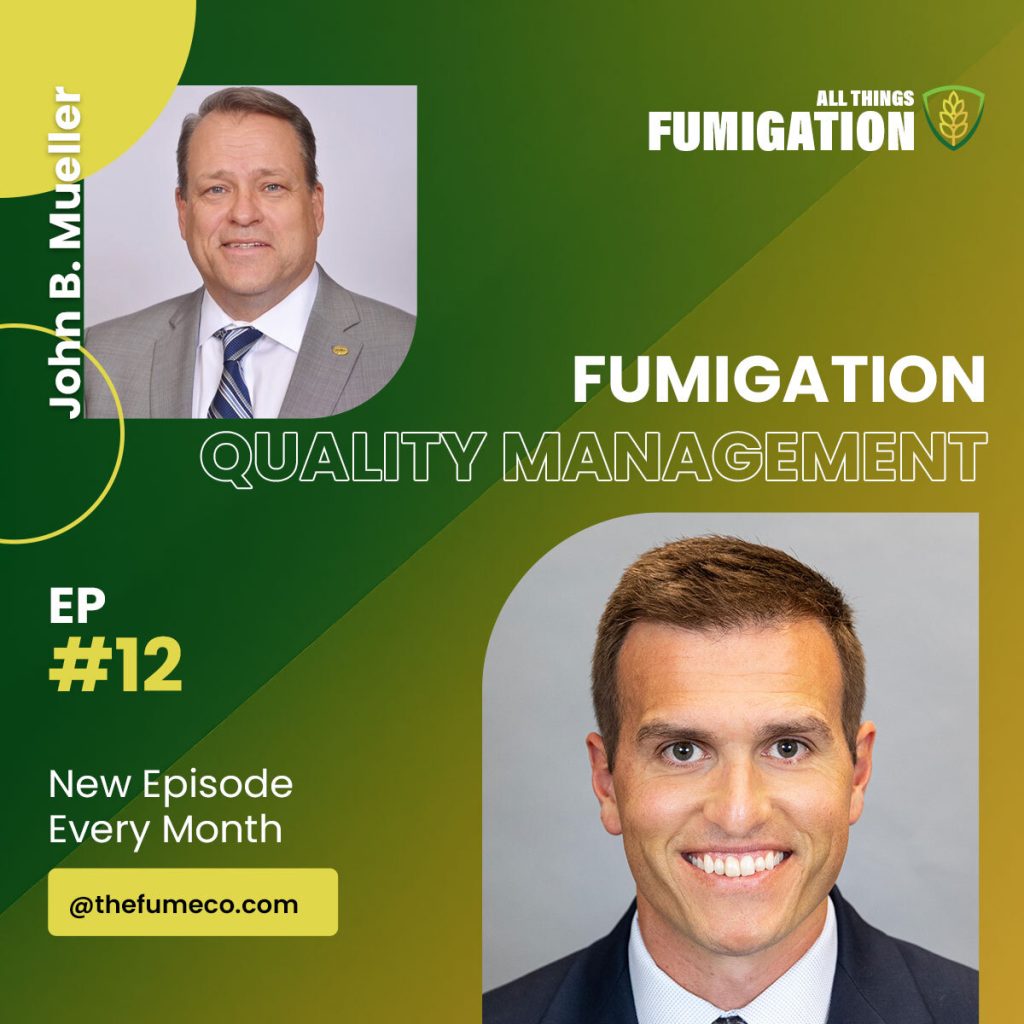
What separates a good fumigation from a great one? In Episode 12 of the “All Things Fumigation” podcast, hosts John B. Mueller, a 40-year fumigation industry veteran, and guest Tom Mueller, president of Insects Limited, deliver actionable insights on creating a culture of excellence in fumigation quality management. This episode dives deep into the tools and strategies that licensed fumigators, facility managers, and food safety professionals can use to drive, verify, and validate successful fumigant applications. From building a results-oriented company culture to leveraging advanced bioassays and pheromone monitoring, this discussion will help you elevate safety, compliance, and real-world pest control outcomes.
Building a Results-Focused Fumigation Culture
Establishing the right mindset and company culture is the foundation of effective fumigation. John B. Mueller highlights the critical distinction between being results-focused versus revenue-focused—a mindset with direct business and compliance implications.
“If you’re a results-focused fumigation company, the revenue will come. If you’re revenue-focused…it’s easy to take the eye off of solving the customer’s problems when you’re worried about making numbers.” John B. Mueller
Results-focused organizations prioritize solving pest problems safely and effectively, naturally attracting customer loyalty and sustained profitability. By contrast, a revenue-first approach risks regulatory shortcuts and diminished trust due to inconsistent results.
Key Attributes of Top Fumigators:
- Respect for safety & compliance: Regulatory adherence (EPA labels, state/local codes) is non-negotiable.
- Attention to detail: Managing complex regulatory requirements and application variables.
- Scientific curiosity: Inquisitiveness drives better analysis and continuous improvement.
- Sense of urgency & grit: The ability to problem-solve and “get it done,” especially under pressure.
Pro-Tip:
Cultivate scientific curiosity on your team and never compromise on safety or regulatory compliance. Long-term success follows those who focus on results—not just the bottom line.
Verification & Validation: Beyond Gas Monitoring
Modern fumigation quality assurance depends on robust verification and validation processes. John B. Mueller and Tom Mueller break down why relying only on connected gas monitoring devices is not enough.
Verification involves confirming that concentration-time (CT) targets for fumigants (e.g., phosphine, sulfuryl fluoride) are met, using gas monitoring, temperature data, and pest density. However, true quality management requires validation—proving actual pest control results, not just process adherence.
“Gas monitoring is the first method of verification…But it’s just the first level. The next is using bioassays and pheromone systems.” John B. Mueller
Technical Note:
- Bioassays use live insects of targeted pest species placed strategically in the facility. After fumigation, their survival or mortality provides direct evidence of efficacy.
- Species-Specific Testing: While red flour beetle is a common benchmark due to its resistance, targeted species selection for bioassays can better match site-specific pest threats.
“If you’re killing red flour beetles, then you’re going to kill your target pest. But…doing the species-specific bioassay is going to be a great way to go.” Tom Mueller
Key Takeaway:
Layer your verification: Use gas monitors for process, bioassays for efficacy, and follow up with pheromone traps to validate real-world impact post-treatment.
The Power of Bioassays and Mixed Life Stage Validation
A recurring challenge in structural and commodity fumigation is ensuring that all pest life stages, especially eggs, are effectively controlled. This episode offers a clear take on why bioassays with mixed cultures—eggs, larvae, pupae, adults—are essential for validation.
“The challenges with fumigations is on that egg stage that has just been laid…if that egg can survive, that’s where the fumigation performance lapse occurs.” John B. Mueller
Why Mixed Life Stages Matter:
The egg stage of some stored product pests (e.g., red flour beetle) is notoriously difficult to kill due to low respiration rates and protective structures. Including mixed metamorphic cultures in bioassays allows for monitoring whether eggs successfully hatch post-fumigation—providing assurance or highlighting failures.
“Holding on to that bioassay for three weeks is a pretty good indicator of whether or not you’re having an emergence out of an egg into a larva.” Tom Mueller
Pro-Tip:
Retain bioassays at room temperature for at least 21 days post-fumigation. Document any late-emerging insects as these may indicate a need to adjust your CT parameters or address structural leaks.
Advanced Pheromone Monitoring: Standards, Strategies, and Smart Decision-Making
Facility pest monitoring using pheromone traps is a game changer for ongoing validation and proactive IPM (Integrated Pest Management). Yet, as Tom Mueller points out, industry standards for pheromone trap placement, type, and program design lag behind those for rodent management.
“The word monitoring to me gives pest control managers the excuse to just stick one out in a facility and say, I have insect monitoring going on. And I don’t believe that’s the right way to do that…these devices are to help you make decisions on your program.” Tom Mueller
Actionable Insights:
- Use enough traps on a smart grid: Don’t rely on a token few.
- Grid strategies should reflect facility flow (tight grid at ingredient intake, tailored placement in processing, protection in finished goods areas).
- Leverage both wing (for moths and some beetles) and floor traps (for crawling beetles), understanding pest biology and travel habits.
- Track counts and locations before and after fumigation for robust validation.
Technical Context:
- Consistent pheromone release is critical for reliable data. Variability in lure formulation can result in misleading catch counts.
- High-quality bullet lure dispensers provide steady release rates, unlike absorption-style lures that can be erratic and environment-dependent.
Key Takeaway:
Invest in high-quality, consistently releasing pheromone traps and implement a data-driven monitoring grid. Use catch data both to pinpoint hotspots and to objectively assess fumigation success over time.
Conclusion
Fumigation quality management is a multi-layered discipline that requires more than just meeting regulatory minimums or achieving short-term control. By building a results-focused culture, leveraging advanced verification and validation tools such as bioassays and pheromone data, and applying rigorous analysis to pest populations across all life stages, both licensed fumigators and facility owners can ensure long-term, compliant, and cost-effective protection. Adopt these proven strategies from John B. Mueller and Tom Mueller to elevate your facility’s pest management program—and your reputation for excellence.
Listen to the Full Episode:
To explore these topics further, listen to the complete episode on your preferred podcast platform.
Watch on YouTube:
You can also watch the full video episode on our YouTube channel.
Subscribe:
Subscribe to All Things Fumigation for expert insights on safety, innovation, and cost-effective strategies. Never miss an episode!
Contact Us:
Need expert fumigation consulting? Schedule a consultation with The Fumigation Company today.