
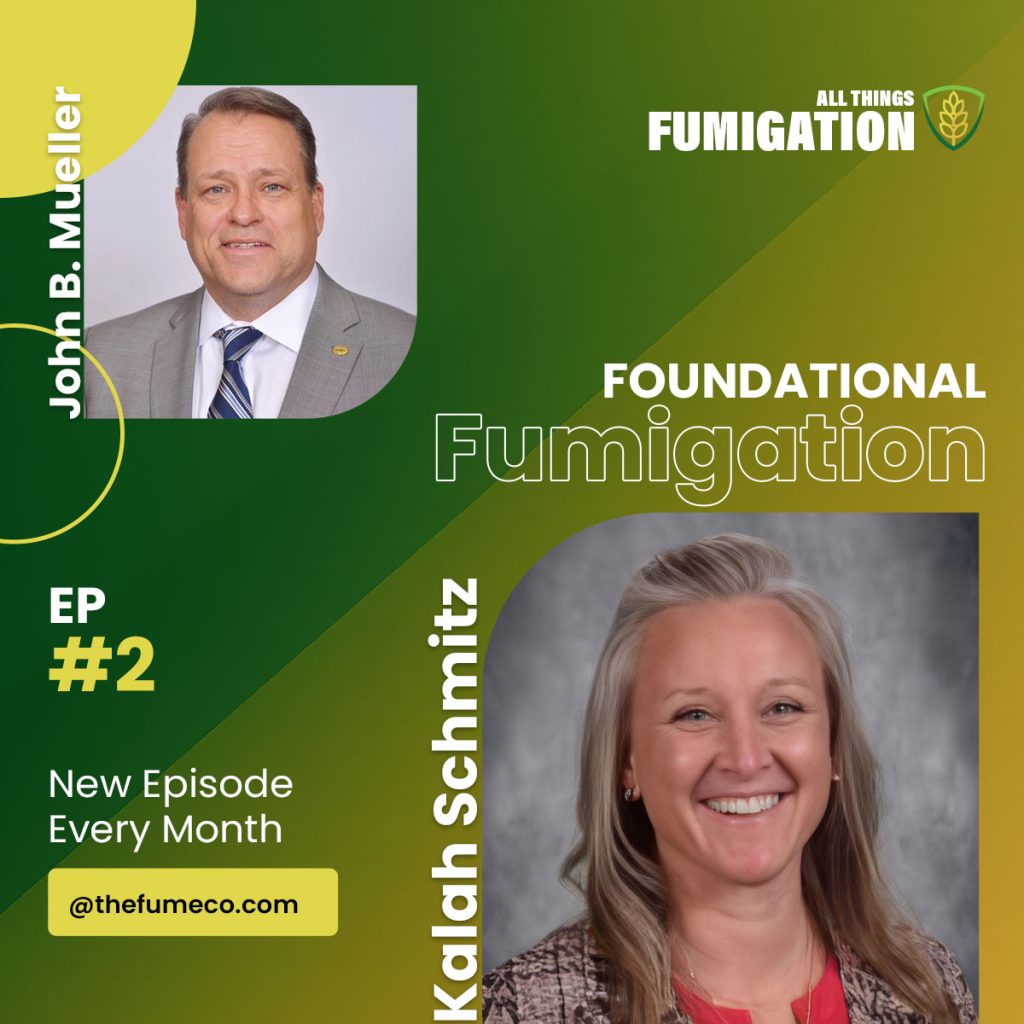
Understanding the segmentation and science behind post-harvest fumigation is essential for licensed fumigators and facility owners committed to protecting commodities and ensuring food safety. Episode 2 of All Things Fumigation—hosted by John B. Mueller, a seasoned fumigator and industry educator, and moderated by Kayla Schmidt, a compliance and safety expert—dives deep into the commercial realities, challenges, and solutions in the fumigation landscape. This episode unpacks the differences between fumigation markets, technical hurdles, IPM integration, and the vital role of science-driven practices for compliance and performance.
Whether you manage grain silos, process food products, or oversee facility operations, this post will distill practical insights and expertise from the podcast, helping you elevate your business and maintain regulatory standards.
Fumigation Markets & Their Unique Applications
Structural, Soil, Post-Harvest, and Antimicrobial Segments
Summary:
The episode begins with a crucial breakdown of fumigation market segments. John B. Mueller offers a clear distinction among structural, soil/pre-plant, post-harvest, and the newer antimicrobial markets, each with its own operational demands and regulatory scope.
“If we zoom out from post harvest and look at all fumigation markets…the first one people see is structural fumigation…that is a structural fumigation market. The second…is soil fumigation or pre plant fumigation…Then we come into the post harvest space. And then post harvest has bled into a fourth market which is remediation of human pathogens…” — John B. Mueller
Technical Elaboration:
- Structural Fumigation: Targets pests like drywood termites in residential/commercial facilities, focusing on preservation rather than commodity safety.
- Soil Fumigation: Pre-plant treatments for crops (vegetables, fruits, nuts), emphasizing pest prevention before planting.
- Post-Harvest Fumigation: Applied to bulk commodities (grain, tree nuts, spices), directly safeguarding food quality and export viability.
- Antimicrobial Fumigation: Emergent focus on eliminating pathogens (Salmonella, Listeria, E. coli) from food processing environments—leveraging gases to reach otherwise inaccessible spaces.
Key Takeaway:
Understanding your facility’s fumigation needs begins with market segmentation. Identify your category and align your approach with targeted regulatory and safety strategies.
Commodity Fumigation: Products, Operations, and Value
From Grains to Specialty Foods
Summary:
Facility owners may assume fumigation is only for major grains. Kayla Schmidt prompts clarification, uncovering the scope of commodities protected under post-harvest fumigation—from wheat, rice, and corn to tree nuts, spices, and cocoa.
“When we’re talking about commodity fumigation, we’re talking about bulk commodities like wheat…rice…corn…soybeans…tree nuts and peanuts…spices, insects love spices, cocoa.” — John B. Mueller
Technical Elaboration:
- Commodity fumigation is not limited to grains—it includes any bulk items at risk from pests or pathogens, such as specialty products (tobacco, tree nuts) and processed foods before packaging.
- Post-harvest fumigation is an event-based, not routine, service. Plant shutdowns are common, requiring strategic planning, detailed compliance checks, and substantial equipment investment.
Pro-Tip:
Plan fumigation around your facility’s operational calendar—considering seasonal pest activity, production cycles, and budget constraints. This ensures optimal efficacy and minimizes disruption.
Integrating Fumigation into IPM: Tools, Strategies, & Mistakes
Maximizing Safety, Compliance, and Performance
Summary:
Fumigation is positioned as a “big hammer” within the Integrated Pest Management (IPM) toolbox. John B. Mueller contrasts the arsenal available to food processors with the limited options commodity managers face.
“If we really take a look at food processors versus commodity managers. Food processors have a lot of tools…There is no substitute for cleaning. Cleaning is the best pest management tool…once they start to see insect pressure…they can deploy crack and crevice residual applications…but commodity managers really depend on fumigants.” — John B. Mueller
Technical Elaboration:
- Food Processors can leverage cleaning protocols (wet wash, CIP, COP), pheromone monitoring, residual applications, fogging, and even heat treatments.
- Commodity Managers lack these options due to the dense, static nature of stored products. Fumigation is often their only effective tool, making precision and compliance critical.
- Import/export operations may be subject to mandatory fumigation for quarantine compliance, dictated by USDA or foreign regulations.
Key Takeaway:
Don’t substitute fumigation with less-effective tools when dense, inaccessible pest populations threaten commodity integrity. Early intervention with the right application prevents escalating damage and regulatory penalties.
Navigating Challenges in Post-Harvest Fumigation
Setting Expectations & Ensuring Efficacy
Summary:
Both fumigators and facility owners face technical and operational obstacles, especially regarding efficacy and monitoring. Unrealistic expectations, ineffective gas monitoring, and delayed responses often undermine results.
“False expectation of 100% efficacy in the field…it’s our job as fumigators to drive that efficacy as high as possible…Lack of effective gas monitoring…is the driver for performance…using the wrong tool and waiting too long…” — John B. Mueller
Technical Elaboration:
- Gas Monitoring is vital for validating that fumigant concentrations meet target levels throughout the application process. Analytics enable retrospective performance assessment and troubleshooting.
- Regulatory Compliance: Always adhere to federal (EPA), state, and local requirements. Licensed fumigators bear legal responsibility for applications—incorrect tools or processes threaten both safety and business viability.
Key Takeaway:
Effective gas monitoring and realistic efficacy goals are non-negotiable. Invest in analytics, train your team, and communicate transparently with stakeholders to maintain compliance and protect your business.
Conclusion
Episode 2 of All Things Fumigation delivers essential knowledge for navigating the complex landscape of post-harvest fumigation. By understanding market segmentation, commodity specificity, IPM integration, and technical challenges, both operators and facility managers can ensure safer, more efficient, and compliant pest control. Leverage science, expert guidance, and proactive planning to maximize outcomes and minimize risk.
Listen to the Full Episode:
To explore these topics further, listen to the complete episode on your preferred podcast platform.
Watch on YouTube:
You can also watch the full video episode on our YouTube channel.
Subscribe:
Subscribe to All Things Fumigation for expert insights on safety, innovation, and cost-effective strategies. Never miss an episode!
Contact Us:
Need expert fumigation consulting? Schedule a consultation with The Fumigation Company today.