
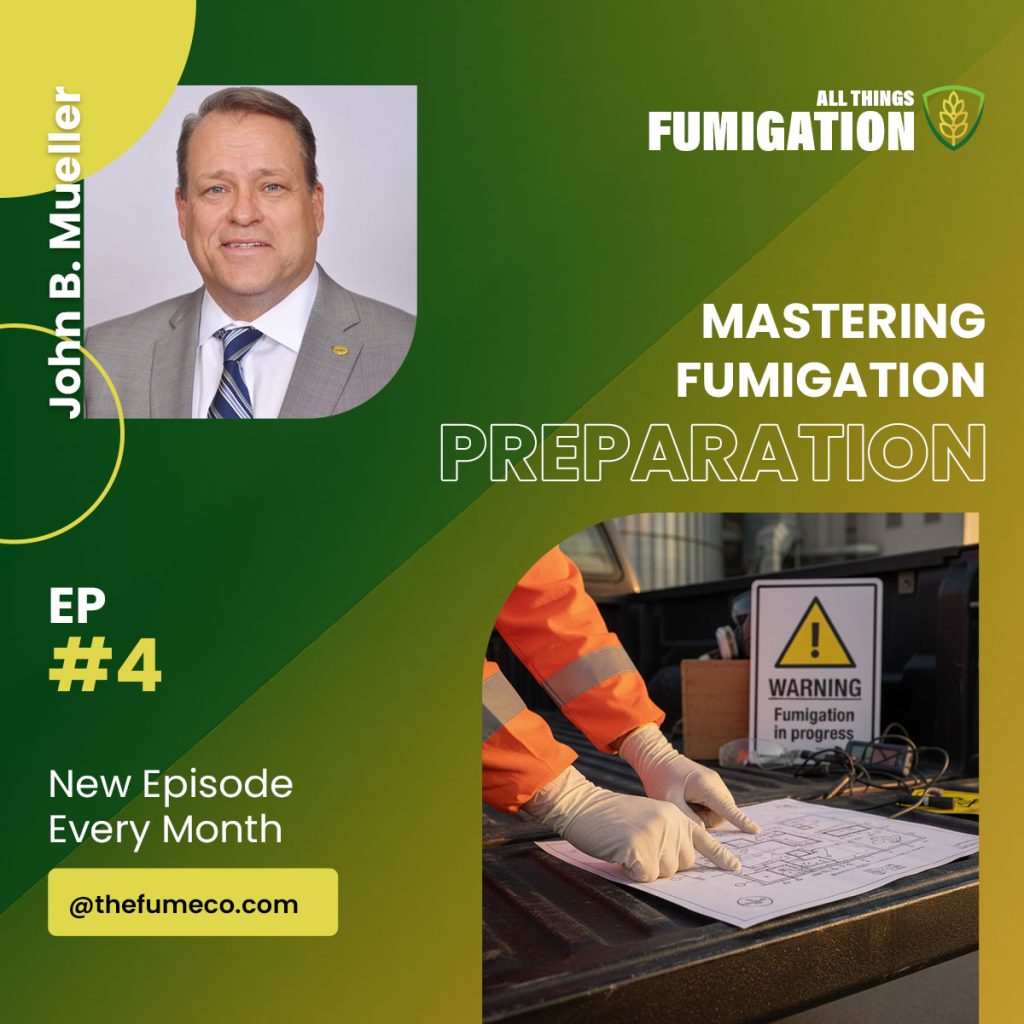
Fumigation is not just a technical process—it’s a high-stakes operation balancing facility safety, regulatory compliance, and operational effectiveness. In Episode 4 of All Things Fumigation, host John B. Mueller—a seasoned industry expert—dives into the essential art and science of fumigation preparation. This episode, sponsored by The Science Company, maker of Eco Fume and Vapor Phos, focuses on practical strategies and regulatory frameworks that every licensed fumigator and facility owner or manager must master. Whether you’re leading applications in the field or overseeing facility risk management, you’ll find actionable insights to raise your standards, protect your bottom line, and reinforce a culture of safety and success.
Thematic Breakdown
1. The Critical Role of the Fumigation Management Plan (FMP) in Regulatory Compliance
A cornerstone of proper fumigation is regulatory compliance—specifically, understanding the function and requirements of the Fumigation Management Plan (FMP). As John B. Mueller explains, the FMP evolved to clarify the ambiguities within lengthier pesticide/fumigant labels and to drive site-specific performance:
“The Fumigation Management Plan was really designed to take those grey spaces of the label and better define the fumigation event that you’re planning for… and really define that fumigation more tightly”
Technical Elaboration:
The FMP is not just a bureaucratic filing—it’s a federally mandated, practical tool required by the EPA (Environmental Protection Agency). It ensures that all aspects of the fumigation (safety, record-keeping, environmental monitoring) are documented and systematically reviewed, transforming compliance from a one-time task to an ongoing partnership between the fumigator and facility.
Key Takeaway:
Never treat the FMP as a ‘checkbox’ exercise. When integrated into team culture, the FMP becomes a blueprint for safer, more effective—and fully compliant—fumigations.
2. Preparation as the Foundation for Safety and Effectiveness
Preparation is the make-or-break phase of any fumigation event. This isn’t just about logistics—it’s a granular process that assigns roles, sets expectations, and actively mitigates hazards. As John B. Mueller notes:
“Preparation starts to get more granular and really identify more specific roles and responsibilities for the partnership that’s leading up to that fumigation event… It’s critical for managing safety and it’s also critical for driving best outcomes and maximum effectiveness.”
Technical Elaboration:
Preparation covers everything from thorough site inspections (“Inspect the site to determine its suitability for fumigation”) to reviewing historical records, consulting with all stakeholders, assessing structural changes, and verifying emergency plans. Facility managers and fumigators should jointly walk the site, especially for new or complex jobs, to identify nuances that may otherwise go unnoticed—such as hidden tunnels, unsealed vents, or adjacent hazards that could compromise the treatment.
Pro-Tip:
Assign a single team to both place and retrieve warning placards. This avoids dangerous oversights and ensures the same attention to detail is applied at every entry point.
3. Safety Protocols: Protecting Workers, Bystanders, and the Public
Regulatory obligations and ethical responsibility demand robust safety protocols. This includes meticulous monitoring, clear communications, respiratory equipment checks, and pre-event briefings. John B. Mueller underscores:
“Safety must be integrated into each step. Everything we’re talking about has to do with safety. We cannot emphasize that enough.”
Technical Elaboration:
- Monitoring: EPA regulations require not only that operator exposure is tracked, but also that bystanders, warehouse staff, or neighboring residents are not inadvertently exposed. Exterior monitoring plans and notification strategies must be in place.
- Equipment: Only trained, licensed fumigators should handle SCBA (Self-Contained Breathing Apparatus), gas masks, or clearance devices.
- Briefings: Don’t resort to generic warnings—your pre-work safety meeting must be specific, responsive to weather/structural conditions, and collaborative.
Key Takeaway:
Proactively communicate and collaborate with all stakeholders (including emergency responders and guards). Personalized, respectful engagement builds trust, enforces safety, and ensures readiness during critical moments.
4. Team Leadership, On-Site Training, and Continuous Improvement
Great fumigations aren’t executed solo—they require strong team leadership and a commitment to developing operational talent.
“A good fumigator in charge never tries to do everything themselves. They divide the workload responsibly, set expectations, and make sure their team is comfortable with the plan.”
Technical Elaboration:
Effective leaders leverage on-site opportunities for hands-on training—helping newer team members progress from basic sealing tasks to assisting with complex gas applications and monitoring. Pre-fumigation meetings, whether in-person or virtual, align everyone’s responsibilities, contingency plans, and emergency contacts.
Key Takeaway:
Build apprentice opportunities into every large or recurring fumigation project. Cultivate your next crew leaders and deepen cross-functional knowledge on your team.
Conclusion
Fumigation preparation is more than just checking boxes—it’s a disciplined, collaborative process that safeguards people, products, and reputations. Integrating rigorous regulatory compliance with thoughtful preparation and hands-on leadership creates a foundation for safer, more effective, and continuously improving operations. For facility owners and fumigators alike, taking these steps means not only meeting legal standards but also setting new benchmarks for professionalism in post-harvest pest control.
Listen to the Full Episode:
To explore these topics further, listen to the complete episode on your preferred podcast platform.
[INSERT PODCAST PLAYER/LINK HERE]
Watch on YouTube:
You can also watch the full video episode on our YouTube channel.
[INSERT YOUTUBE LINK HERE]
Subscribe:
Subscribe to All Things Fumigation for expert insights on safety, innovation, and cost-effective strategies. Never miss an episode!
Contact Us:
Need expert fumigation consulting? Schedule a consultation with The Fumigation Company today.
By prioritizing preparation, compliance, and ongoing training, you ensure every fumigation is a success—for your facility, your people, and your industry.