
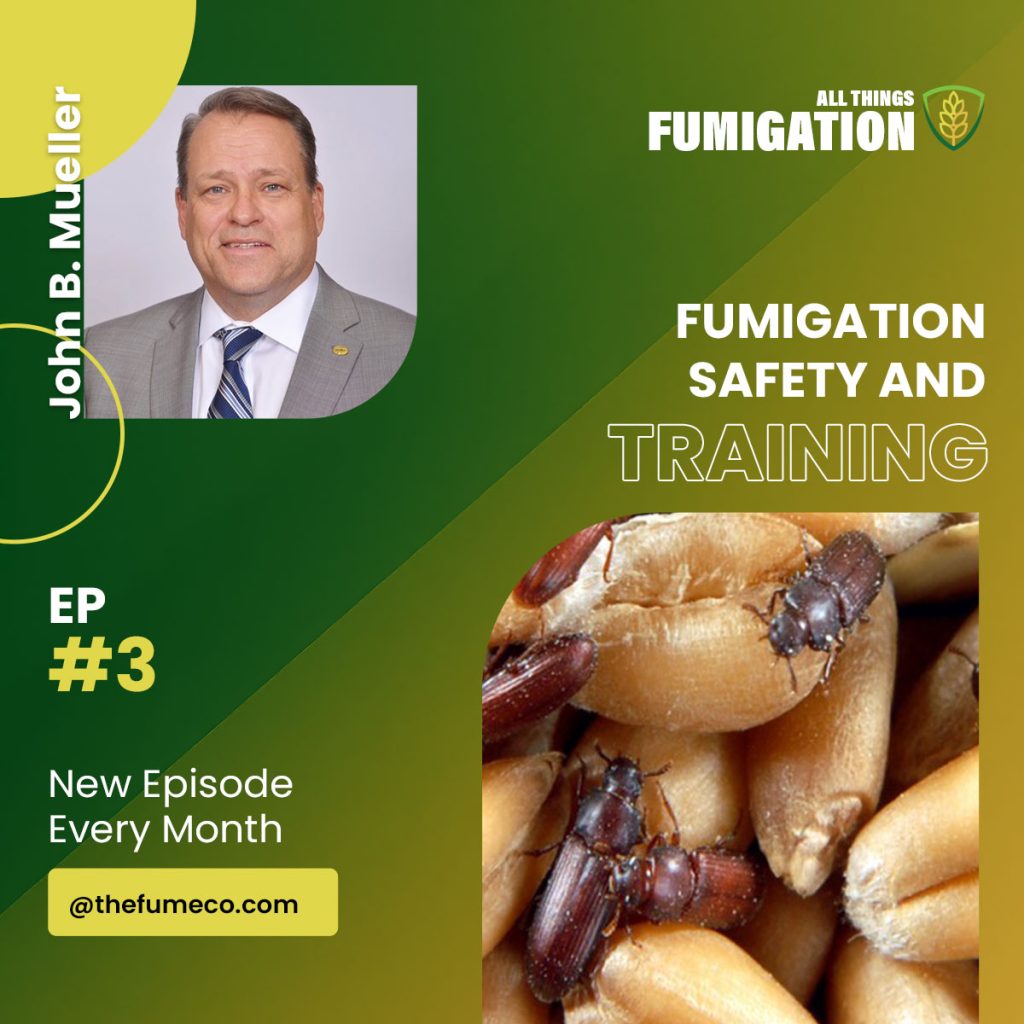
Effective fumigation isn’t just about deploying chemicals; it’s a science-driven process that begins long before the first application. Episode 3 of All Things Fumigation, hosted by industry expert John B. Mueller, dives into the art and science of strategic preparation for fumigation success. In this episode, John B. Mueller draws on applied science and decades of field experience to reveal why proper planning, environmental monitoring, and partnership with facility teams are non-negotiable for both compliance and optimal pest management.
Whether you’re a licensed fumigator or a facility manager, this episode delivers actionable insights on how to transform your approach—moving beyond reactive pest control toward proactive, results-driven strategies. Key topics include environmental factors, the science behind CT (concentration x time) products, the underestimated dangers of population density, and the power of planning and collaboration.
Read on for a deep dive into the principles that set top-tier fumigation operations apart and drive consistent, regulatory-compliant results.
The Power of Planning: “The Battle Is Won Before It Is Fought”
Fumigation success is determined long before doors are sealed or gases are applied. John B. Mueller underscores the foundational role of strategic planning, drawing inspiration from Sun Tzu’s classic axiom:
“The battle is won before it is fought.”
— John B. Mueller quoting Sun Tzu
Key Elements of Strategic Planning:
- Understanding and controlling environmental conditions well in advance.
- Collaborating closely with facility owners/managers to establish roles, set expectations, and drive accountability.
In the episode, John B. Mueller breaks the fumigation process into critical steps: plan, prepare, set up, apply, monitor and analyze, ventilate and clear, and review. However, planning is where failures are prevented and performance is maximized.
Pro-Tip:
Start your planning months ahead—especially for complex fumigations. Assign roles, clarify responsibilities, and develop site-specific strategies collaboratively. Early and detailed planning reduces surprises, compliance risks, and operational disruptions.
Environmental Conditions: The Science Behind Fumigation Efficacy
One of the top reasons for fumigation failures is neglecting the technical details of environmental conditions—specifically, temperature and how it affects product performance.
John B. Mueller explains:
“My main focal point at that point is temperature. What is the temperature of the facility and what is the temperature of the commodity? So that then determines concentration and time.”
— John B. Mueller
CT Relationships Explained
- Methyl bromide: Pure CT (Concentration x Time) relationship. Doubling concentration allows halving time (within label limits).
- Phosphine: “Little C, big T”: Time is more critical than concentration (typical exposure: 3–10 days). Doubling the dose does not double speed.
- Sulfuryl fluoride: Front-end punch matters—early, adequate concentration maximizes lethality, especially on eggs.
Technical Note:
EPA, federal, state, and local regulations strictly dictate fumigant rates and exposure periods. Always read the label and ensure every application is both law- and science-compliant.
Key Takeaway:
Commodity temperature is more important than air temperature. Insects reside within the commodity—not the surrounding air. Always monitor and record the lowest likely commodity temperature to avoid efficacy loss, especially on insect eggs.
Population Density: Unseen Threats to Fumigation Success
Often, facility owners and fumigators underestimate the massive scale of insect populations hiding within commodities and structures. John B. Mueller highlights the exponential nature of pest infestations and why “see bug, kill bug” is an obsolete mindset.
“If you’re seeing hundreds or thousands of adults walking around, what about the eggs? Are there tens of thousands, hundreds of thousands, or millions? The answer is absolutely yes.”
— John B. Mueller
Why Population Density Matters
- High pest counts increase the risk of post-fumigation survival, especially during resistant life stages (like eggs).
- Even with 94% efficacy, thousands of eggs may survive if initial numbers are not addressed.
Key Takeaway:
Waiting too long to fumigate breeds “fumigation dependence,” increases costs, and damages your reputation. Adopt regular monitoring, strong facility-wide cleaning, and rapid response strategies—not just last-minute interventions.
Partnership and Communication: Driving Consistent Results
Sustainable fumigation results depend on genuine partnership between service providers and facility staff. John B. Mueller emphasizes the importance of clear communication, mutual education, and a shared commitment to preparation.
“The fumigators can’t just do this alone. They need the facility cooperation to develop these environmental conditions that put us at an advantage.”
— John B. Mueller
Implementing a Team Approach
- Align expectations regarding downtime, cleaning routines, and environmental prep.
- Educate facility teams about how their actions (or inactions) directly impact treatment outcomes.
- Assign and track specific roles both pre- and post-treatment for accountability.
Key Takeaway:
Successful fumigations are always rooted in partnership. Involve facility stakeholders early, educate them on the “why,” and provide actionable direction for their critical prep and follow-up roles.
Achieving reliable fumigation outcomes comes down to scientific discipline, thorough planning, and strong collaboration. From temperature management and population control to team alignment, John B. Mueller illustrates that top-tier results depend on applying science—not luck or legacy routines. For fumigators and facility leaders alike, investing in well-designed preparation and communications is the surest route to improved safety, compliance, and pest-free facilities.
Listen to the Full Episode:
To explore these topics further, listen to the complete episode on your preferred podcast platform.
Watch on YouTube:
You can also watch the full video episode on our YouTube channel.
Subscribe:
Subscribe to All Things Fumigation for expert insights on safety, innovation, and cost-effective strategies. Never miss an episode!
Contact Us:
Need expert fumigation consulting? Schedule a consultation with The Fumigation Company today.
Want more? Stay tuned to All Things Fumigation for actionable, science-based pest control strategies to protect your facility and reputation.