
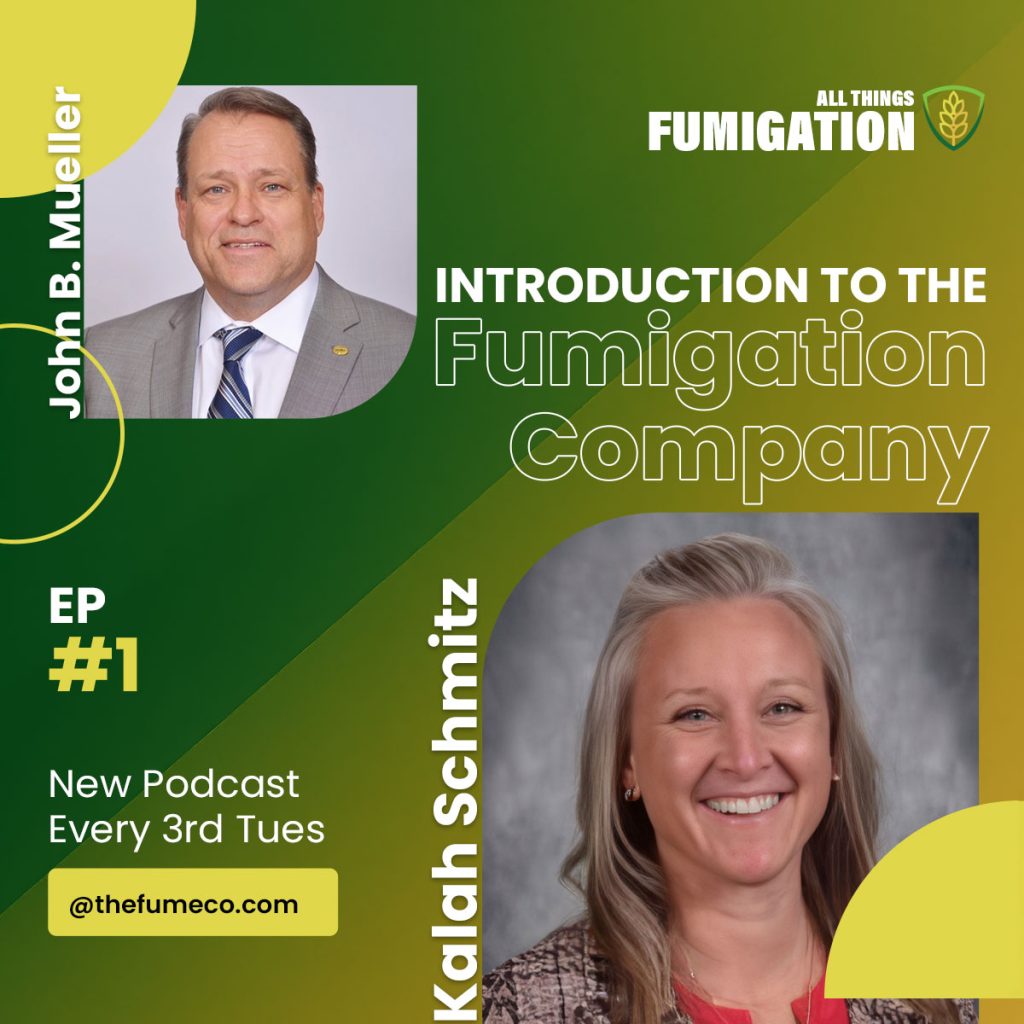
Welcome to the inaugural episode of the All Things Fumigation podcast, your trusted source for industry-leading knowledge on fumigation safety, compliance, and scientific solutions. In Episode 1, hosts John B. Mueller—a licensed fumigator with over 40 years of experience—and industry veteran Kalah Schmitz, dive deep into the fundamental challenges, best practices, and emerging innovations shaping modern fumigation.
Whether you’re a licensed fumigator navigating regulatory complexities or a facility manager seeking actionable insights to protect your business and commodities, this episode provides a comprehensive foundation for smarter, safer fumigation strategies. Key topics include regulatory compliance, safety protocols, the science behind fumigants, and the role of innovation in driving operational excellence. Read on to discover practical takeaways and expert perspectives that will help you elevate your fumigation approach.
Safety First: Protecting People, Products, and the Environment
The Cornerstone of Fumigant Application
Fumigation is more than pest elimination—it’s a precision-driven process governed by stringent safety standards. From the very start, John B. Mueller reminds us:
“You cannot have a conversation around fumigation without talking about safety. Many times we think myopically around… applicator safety, when in fact that’s just one component of a lot of safety criteria.”
A thorough safety protocol addresses:
- Applicator Safety: Licensed fumigators are legally responsible for properly applying fumigants, following federal, state, and local laws.
- Operator Safety: Facility employees must be protected during and after fumigant application.
- Bystander Protection: Ensuring safe distances and monitoring is critical for anyone near treated sites.
- Equipment & Product Safety: Phosphine, for instance, is corrosive to soft metals and electronics, while over-application can lead to product adulteration.
- Environmental Safety: Labels and guidelines are designed to minimize ecological impact.
Pro-Tip:
Always follow the federal fumigant label and local regulations. Safety compliance starts with label adherence and extends to comprehensive site-specific risk assessments.
Compliance: Navigating Regulatory Landscapes
Understanding and Implementing Legal Mandates
Regulatory compliance is a driving force behind every successful fumigation project. The industry faces a robust framework of federal EPA guidelines, DOT transport restrictions, DHS security mandates, and state licensing requirements. John B. Mueller underscores:
“The labels for these fumigants are… 45 and 60 pages long. They cover all kinds of different criteria. They’re laid out very well, they’re easily followed. Also from a compliance standpoint, we’ve got transportation DOT restrictions… Storage that states regulate, all done through the label.”
Mandatory requirements include:
- Detailed Recordkeeping: Ensuring proper documentation of treatment protocols, chemical storage, and disposal.
- DOT & DHS Regulations: Hazardous materials transport and site security protocols are non-negotiable.
- Periodic Re-Registration: Fumigants are subject to 15-year review cycles for updated safety standards.
Key Takeaway:
Compliance is not optional—it’s essential. Invest in digital tools and ongoing training to track regulatory changes, streamline recordkeeping, and maintain your facility’s legal standing.
Scientific Solutions: Precision, Potency, and Low Residue
Why Fumigants Are the Big Hammer in IPM
At the heart of modern fumigation lies rigorous science, guiding everything from potency to environmental footprint. Fumigants deliver unmatched mobility, non-selectivity, and precision control, making them fundamental tools in Integrated Pest Management (IPM). As John B. Mueller puts it:
“Fumigants are, in my opinion, the most potent tool in the integrated pest management toolbox… When you need a hammer, it needs to be there.”
Technical Context:
- Mobility: Fumigants permeate grain masses, wall voids, and equipment pathways, targeting pests where other chemistries cannot reach.
- Non-selectivity & Speed: Unlike fogging or residual sprays, fumigants kill eggs, larvae, pupae, and adults in one treatment cycle.
- Low or No Residual Toxicity: Most fumigants are inorganic, resulting in minimal residues compared to traditional pesticides—and making them desirable for today’s residue-conscious consumers.
“Fumigant gases… tend to not bind up with other organics. There are maximum residue levels… but they are incredibly low by comparison to other options that are out there.”
Pro-Tip:
Emphasize fumigants’ precision and low-residue advantages when educating customers or staff. Proper application protects commodities while supporting compliance with evolving food safety standards.
Innovation: Transparency, Analytics, and Digital Tools
Driving Performance and Cost Savings
The next frontier in fumigation is digital transparency and analytics. John B. Mueller shares his vision:
“The innovative part is what I’m looking most forward to… How can we help develop things to improve performance for fumigators? Transparency allows you to develop analytics. Analytics reviewed allows you to drive performance.”
Modern fumigators and facility managers benefit from:
- Digital Labels & Fumiguide: Optimized dosing based on pest biology, temperature, and commodity specifics.
- Analytics & Recordkeeping: Data-driven evaluation of treatment efficacy, driving continuous improvement and cost control.
- Customer Communication: Demonstrate proven results and justify fumigation investments with detailed reports.
Key Takeaway:
Leverage new digital solutions for compliance, analytics, and reporting. This not only ensures regulatory alignment but also delivers transparent performance metrics to customers, enhancing trust and value.
Conclusion
Episode 1 equips licensed fumigators and facility managers with a comprehensive overview of fumigation’s safety, compliance, scientific foundations, and emerging innovations. Clear, lab-driven protocols and transparent analytics are transforming the industry—ensuring safer operations, regulatory peace of mind, and competitive results. The knowledge and tools discussed empower professionals to optimize their practices, protect commodities, and sustain regulatory compliance.
Listen to the Full Episode:
To explore these topics further, listen to the complete episode on your preferred podcast platform.
Watch on YouTube:
You can also watch the full video episode on our YouTube channel.
Subscribe:
Subscribe to All Things Fumigation for expert insights on safety, innovation, and cost-effective strategies. Never miss an episode!
Contact Us:
Need expert fumigation consulting? Schedule a consultation with The Fumigation Company today.